What Brentwood Home Inspections Are Actually Flagging in 2026, and What Sellers Should Fix Before Listing
July 16, 2026
July 16, 2026
Two years ago in Brentwood, a seller could hand a buyer a forty-page inspection report, agree to swap a garbage disposal, and close near list. That market is gone. As of early July 2026, Brentwood's single-family segment is carrying roughly 8.1 months of supply at a 98.2% sale-to-list ratio, which is textbook buyer's-market territory and a real shift in who holds the pen during the repair-request phase.
The interesting part is not the softness itself. It is that the inspection findings driving re-trades in Brentwood right now are not the generic ones a national checklist would predict. They are Williamson County items, and they split cleanly by the age of the house.
Trailing six-month numbers put Brentwood at 461 closings, a $1.32M median, and $346 per square foot, with the price band running from about $373K on the older established resale end up past $4.3M in new construction. Days on market in the priciest new-construction enclaves like Rosebrooke, Governors Club, and Hampton Reserve sit in the mid-30s to 60s. That is not a mispricing story. It is a small, patient buyer pool with time to negotiate. In practice, that time gets spent on the inspection response.
If the market were still absorbing in six weeks, a buyer would hesitate to walk over a $9,000 crawl-space repair. At 8.1 months of supply, they will.
The most useful thing a seller can do before ordering a pre-listing inspection is figure out which Brentwood their house lives in. The inspection profiles diverge sharply.
| Profile | Typical build era | What inspectors flag most | Where the re-trade risk lives |
|---|---|---|---|
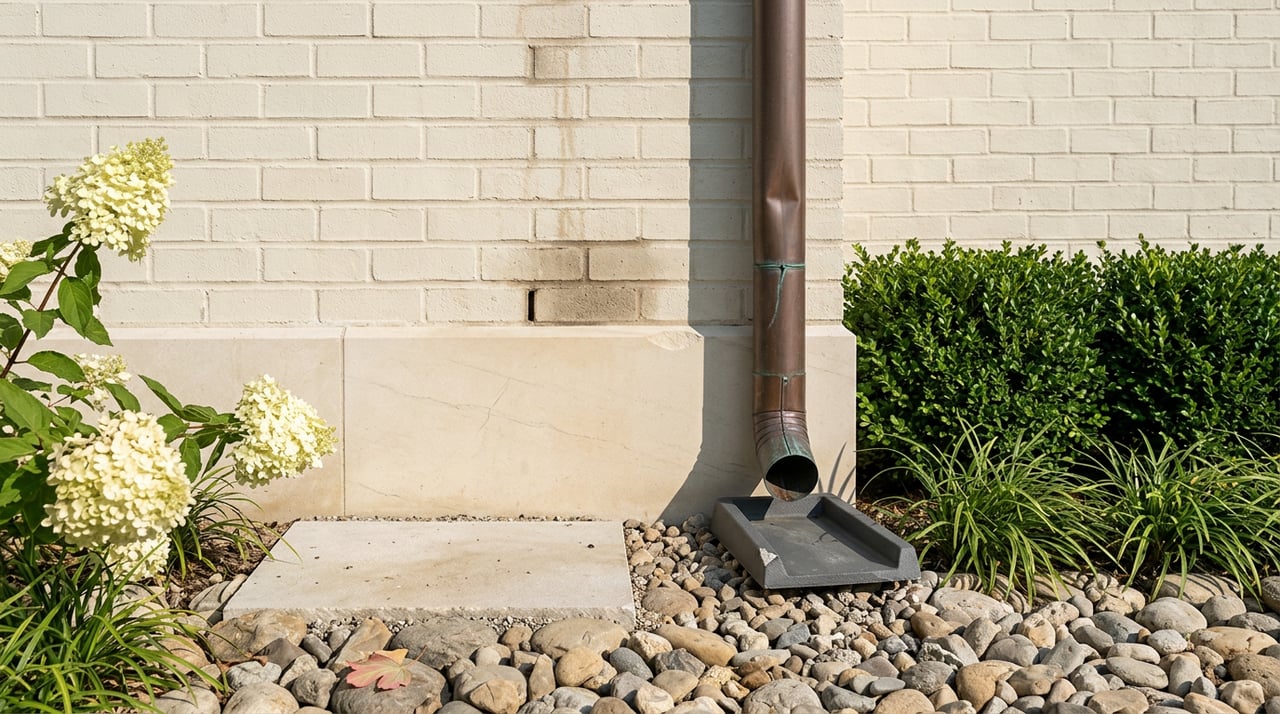
| Established resale (Brookfield, Governors Club original phases, Annandale, Chestnut Springs, etc.) | Mid-1990s through mid-2000s | HVAC systems at end of useful life, crawl-space moisture and vapor barrier failure, deferred roof and fascia wear, grading and drainage settled away from the foundation, original clay or cast-iron sewer laterals | Systems dollars: HVAC replacement, roof sections, drainage regrade |
| New-construction luxury (Rosebrooke, Hampton Reserve, newer phases of Witherspoon and Bella Collina) | 2020 to present | Workmanship items tied to fast subcontractor scheduling, attic ventilation, drainage around freshly graded lots, HVAC installation quality, moisture intrusion at flashing and window openings | Punch-list credibility: builder responsiveness and warranty scope |
Both profiles share two Middle Tennessee constants, humidity and clay-heavy soil, which is why crawl-space moisture and grading around the foundation show up in almost every report regardless of build year.
A buyer moving in from Denver or Chicago reads a Tennessee inspection report through a national lens and misses the local weight of a few specific findings. These are the ones that change the negotiation.
Radon. The EPA classifies Williamson County as Zone 1, its highest-potential category, driven by the same limestone and karst geology that shapes the rest of the county. The action level is 4.0 pCi/L, and mitigation systems can reduce concentrations by up to 99%. A standard sub-slab depressurization system runs a fraction of what most buyers ask for in credit when a test comes back at 4.2. Testing before listing costs a few hundred dollars and removes the single most common environmental line-item from the negotiation.
Sinkholes and karst. Tennessee's disclosure statute defines a sinkhole at Tenn. Code Ann. § 66-5-212(c) as a subterranean void created by the dissolution of limestone or similar rock. Williamson County sits on exactly that geology. Sellers are required to disclose known sinkholes on the property, and buyers on karst terrain have started asking for geotechnical letters when driveway depressions or lawn sags show up in walk-through photos. The disclosure is not optional, and the honest answer up front is worth more than the polished one three weeks in.
Septic in the WSDM zone. Brentwood lots on septic fall under the Williamson County Department of Sewage Disposal Management, which requires more inspections than the state baseline and, on advanced systems, an ongoing annual service arrangement that can run around $2,500. Relocators sometimes assume septic is a rural formality. It is not, and a buyer who discovers the maintenance contract at closing is a buyer who asks for a credit.
Termites and wood-destroying organisms. The state disclosure form specifically flags wood-infestation contingencies, and the humid subtropical climate makes a current WDO letter table stakes. If there is prior termite treatment history, disclose it and hand over the bond paperwork. Tennessee sellers stay liable for undisclosed known material defects for a year after closing under the remedies at Tenn. Code Ann. § 66-5-208.
Inspection reports run forty to sixty pages. Most of what they contain is documentation, not leverage. The items that consistently move dollars in Brentwood right now share three qualities: a safety or systems angle, a clean repair estimate a buyer can hand you from a licensed contractor, and a fix that a homeowner's insurance carrier would care about.
That means the re-trade math tends to concentrate on:
Cosmetic items and normal end-of-life notes on components that still work rarely move price in a healthy negotiation. They do move price when a seller ignores the real findings and forces the buyer to fight for everything at once.
The Brentwood seller who lists in the second half of 2026 has one meaningful advantage over the buyer: time. Use it. A ten-day pre-listing sequence changes the shape of the inspection response before it starts.
Staging and paint sell the showing. This list protects the price after the buyer says yes.
Do I have to fix everything the inspector flags? No. Tennessee's disclosure regime asks sellers to answer in good faith about known material defects, not to conduct their own investigation. Your obligation is honesty about what you know, not perfection. The purchase and sale agreement, not the disclosure form, governs which repairs actually get made.
Should I sell "as-is" to avoid the disclosure? The Tennessee statute allows a disclaimer only where the buyer waives disclosure, and even then sellers still have to answer a short list of statutory questions including sinkhole knowledge. In a buyer's market with more than eight months of supply, most Brentwood buyers will not waive. The disclaimer route usually costs more in price than the disclosure route costs in effort.
Is a pre-listing inspection worth it on a new-construction luxury home? Often, yes. Fast subcontractor scheduling produces workmanship items that a builder will fix quickly during warranty but that a resale buyer's inspector will still flag hard. Catching them before the listing photos go up keeps the report shorter and the negotiation calmer.
How long am I on the hook after closing? Buyers in Tennessee generally have a limited window to pursue a nondisclosure claim under the remedies at Tenn. Code Ann. § 66-5-208. That is a legal question worth asking a Tennessee real estate attorney before you sign a disclosure, not something to work out from a blog post.
If you are thinking about listing in Brentwood this year, the pre-listing walk-through is the highest-leverage hour on the calendar. Tricia Gray is happy to walk your home with you, flag the items a Williamson County inspector is likely to circle, and map a prep sequence that protects your price before the first showing. Let's connect.
Stay up to date on the latest real estate trends.



Tricia is known for her patient approach and understands that finding the perfect property may take some time. Above all, she wants to ensure her clients are happy. Let's connect today!